
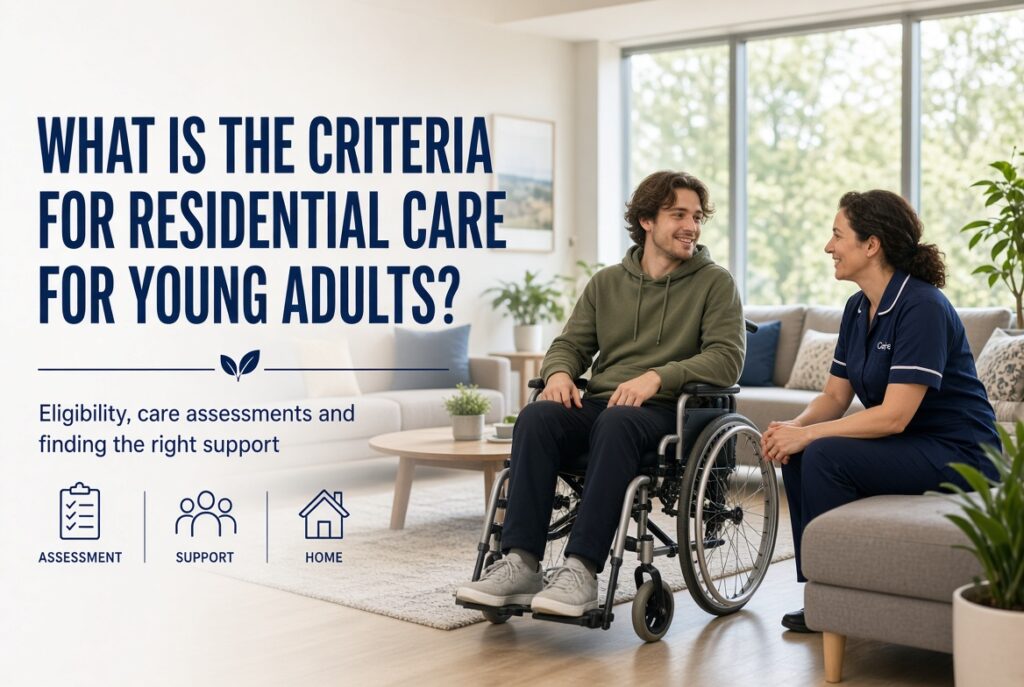
If you are a young adult who is physically disabled and considering your care options, residential care might be something you’ve heard of. This is a type of care option that provides accommodation and meals, alongside care and support to help you with everyday activities. The level of support will be tailored to your needs and requirements. But who is eligible for residential care? And what is the criteria for residential care for young adults?
So, what is the criteria for residential care?
The criteria for residential care will generally be based on whether you need regular support with everyday activities and whether those needs can be safely met within a residential care setting. For young adults who are physically disabled, this could mean needing assistance with things such as:
- Personal care
- Washing and dressing
- Moving around
- Using mobility equipment
- Getting in and out of bed
- Taking medication
- Preparing meals
- Managing everyday routines
It’s important to note that you don’t need to require constant care to benefit from a residential care setting, as the level of support needed can vary considerably from person to person. The important factor is whether the care setting can provide the right support for the needs you do have, and whether this will fit with your own personal interests and aims.
Do you have to be physically disabled to receive residential care?
Residential care is available to people with a wide range of needs and circumstances, so you don’t necessarily have to be physically disabled to benefit from this type of care. However, some residential care homes will be tailored specifically to support young adults with physical care needs, including having specialist equipment and accessibility adaptations made throughout the setting.
If you are physically disabled, you may be considered for residential care if your needs mean that living completely independently at home is difficult or unsafe, or if you require a level of support that is difficult to arrange in your current circumstances. Your disability alone does not automatically mean that residential care is the right option — instead, your individual care and support needs will be considered.
What level of care do you need?
There is no specific amount of care that you have to need before residential care becomes an option. For example, you may need help with several aspects of your daily routine, but still be able to make your own meals, manage some personal tasks and spend time independently. Alternatively, you may need more frequent assistance throughout the day and night. This is why an assessment of your needs can be helpful when deciding which type of care would be most appropriate.
Do you need a care assessment?
If you are considering residential care, you may have a care needs assessment to understand what support you require. The assessment looks at how your needs affect your everyday life and what type of assistance could help you. You may be asked about areas such as:
- Personal care
- Mobility
- Communication
- Preparing food
- Managing medication
- Maintaining your home
- Getting out and about
- Staying safe
- Education or employment
- Social activities and relationships
The aim is to build a clearer picture of your circumstances and identify the type of support that could help you live as independently as possible.
Can young adults with complex needs receive residential care?
Some residential care homes can support young adults with more complex physical care needs. This could include people who require assistance with specialist equipment, mobility, transfers or more involved personal care. However, not every residential care home will have the facilities, staffing or expertise needed to provide complex support.
If you have higher care needs, you should therefore ask potential providers whether they have experience supporting people with similar requirements and whether they can provide the level of care you need. In some circumstances, a specialist residential or nursing care setting may be more appropriate.
At Derby Lodge, our home is fully adapted for wheelchair users and people with physical disabilities. You can find out more about our full adaptations and specialist equipment.
Does your age matter?
Age can be an important consideration when looking for residential care as a young adult. Although residential care is available to people of different ages, not every care home will be designed with younger adults in mind.
If you are a young adult, you may want to find a setting where the accommodation, activities and overall environment are appropriate for your age and lifestyle. Here at Derby Lodge Residential Care Home in Preston, this is what we specialise in. We also place a strong focus on activities and leisure that reflect the interests of younger adults.
In conclusion
There is no single set of criteria that determines whether you are suitable for residential care. Instead, the decision will depend on your individual care needs, circumstances and the type of support you require. For young adults who are physically disabled, residential care may be appropriate if you need regular assistance with everyday activities and require a level of support that cannot easily be provided through your current living arrangements.
Here at Derby Lodge Residential Care Home in Preston, we specialise in providing high quality care for young adults with physical disabilities. Why not get in touch today to find out more about what we can offer?