
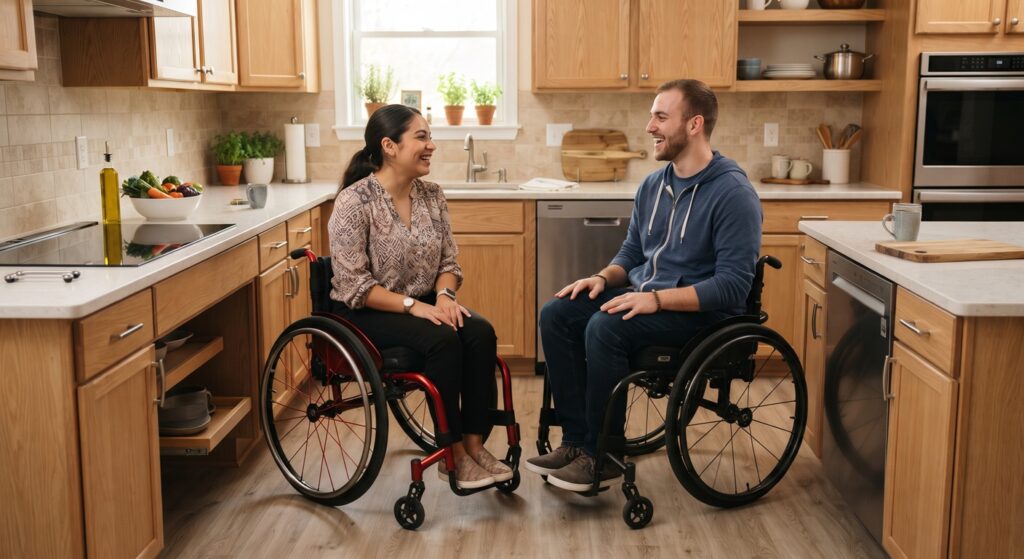
If you or someone you care about needs regular help with everyday activities, you may be wondering whether residential care is an option. Residential care provides accommodation alongside support with daily living. It can be suitable for older people as well as younger adults who need assistance because of a physical disability, a long-term condition or other care requirements. However, there is no single rule that automatically determines who qualifies for residential care. The decision depends on your individual needs, the support you require and whether a particular care setting can meet those needs.
What Is Residential Care?
Residential care is a living arrangement where you receive accommodation and support within a care home. Depending on your care plan, staff may help with personal care, getting dressed, moving around, taking medication and managing everyday routines.
Residential care can be suitable for people who need regular assistance and would benefit from having support available within their living environment. For younger adults, it is important to find a care home that understands their age, lifestyle and personal goals, as well as their physical or care needs.
Who Might Qualify for Residential Care?
Residential care may be appropriate if you need support with everyday activities that cannot be met adequately through your current arrangements. This could include people who:
- Need regular help with washing, dressing or personal care
- Have mobility difficulties and require assistance with transfers
- Have a physical disability that affects everyday activities
- Need support throughout the day
- Have care requirements that are difficult to manage safely at home
- Would benefit from living in a supported environment
These are examples rather than a fixed list of qualifying conditions. Having a disability or medical diagnosis does not automatically mean that you need residential care. Equally, you do not necessarily have to be elderly to be considered for this type of support. The key question is whether residential care is suitable for your individual circumstances.
Can Young Adults Qualify for Residential Care?
Yes. Young adults can receive residential care if their needs and circumstances make this an appropriate option. For example, you may have a physical disability that means you need regular assistance with personal care, mobility or using specialist equipment. You may also want to explore living away from the family home while continuing to receive the support you need.
A suitable young adult care home should provide the necessary assistance while helping you maintain independence, relationships and interests.
It is important to look for a setting that can meet your needs safely and offers an environment that is appropriate for your age and lifestyle.
Do You Need a Medical Condition to Qualify?
Not necessarily. Residential care decisions should not be based solely on whether you have a particular diagnosis. Instead, consideration should be given to how your needs affect your everyday life and what support would help you live safely and comfortably.
For example, two people with the same physical disability may have very different care requirements. One person may manage well with adaptations and occasional support at home, while another may need regular assistance throughout the day.
Your individual circumstances are therefore more important than a diagnosis alone.
How Is Eligibility for Residential Care Assessed?
If you live in England and need help with care and support, you can contact your local council’s adult social care team to request a needs assessment.
The assessment looks at how your needs affect your daily life and what support may help you maintain your wellbeing and independence. It may consider areas such as:
- Personal care and hygiene
- Eating and drinking
- Getting around safely
- Managing daily routines
- Maintaining relationships and social activities
- Your ability to achieve important everyday outcomes
- The support you already receive
Following the assessment, the council can explain which care and support options may be appropriate.
If you are seeking help with the cost of care, financial assessment is a separate part of the process. Meeting the criteria for care and support does not automatically mean that the council will fund a particular care home.
Arrangements can differ across the UK, so check the relevant process where you live.
Does Qualifying for Residential Care Mean You Must Move Into a Care Home?
No. Even if you need additional support, residential care is not automatically the only option. Depending on your circumstances, other arrangements may allow you to remain in your own home or live more independently. These could include:
- Home care: Visiting care workers help with particular tasks or routines.
- Supported living: You have your own home or tenancy with support arranged around your needs.
- Adaptations and equipment: Changes to your home may make everyday activities easier.
- Family and community support: Help from relatives or local services may contribute to your care arrangements.
- Respite care: Temporary care can provide support for a short period rather than a permanent move.
The most suitable option will depend on the level of assistance you need, your preferences and what services are available.
What Should You Do If You Think You Need Residential Care?
If you think residential care may be suitable, start by discussing your needs with your local council’s adult social care team or a relevant health or social care professional. You can also contact care homes directly to ask about their admission criteria, staffing, facilities and experience supporting people with similar needs. Before making a decision, consider whether the setting can provide the care you need and whether it will support your independence and quality of life. Visiting potential care homes can help you understand the environment and decide whether it feels right for you.
Here at Derby Lodge Residential Care Home in Preston, we specialise in providing high quality care for young adults with physical disabilities. Why not get in touch today to find out more about what we can offer?